The Hidden Signal in Home Sales
Analysis of 6,617 HVAC permits reveals a predictable replacement spike around home sales—but timing varies dramatically by region. Here's how CMOs can turn this insight into a competitive edge.
Written by Philipp Krinner, CEO & Co-Founder of Arch AI
Last Updated: March 2026
We analyzed 6,617 HVAC permits. The pattern we found isn't just interesting. It's a tactical weapon for any home services CMO willing to use it.
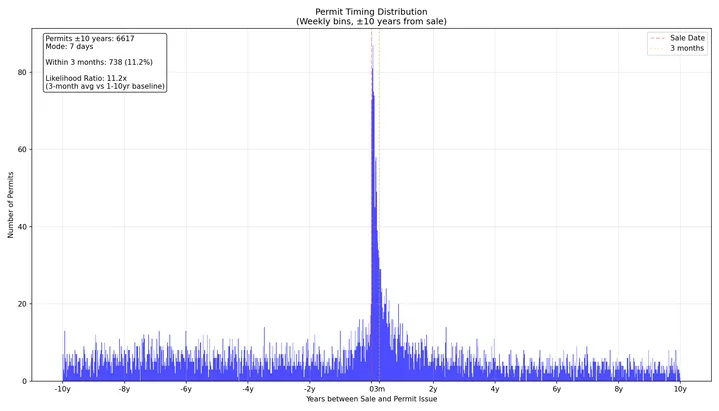
The 3-Month Window Nobody's Talking About
Here's the headline: HVAC replacements spike within 3 months of a home sale. That's not speculation. It's permit data.
But here's where it gets interesting. The timing of those replacements shifts dramatically by region.
- San Mateo County: Installations spike after closing
- Virginia: Activity peaks before the listing goes live
This isn't a curiosity. It's a competitive moat waiting to be dug.
Marketing teams that align with local sale patterns capture high-value jobs ahead of competitors. Those who overlook this data? They're showing up to the party after everyone's gone home.
A Tale of Two Markets: Why the Split?
Three forces drive whether your market behaves like San Mateo (post-sale) or Virginia (pre-sale):
1. Market Norms & Buyer Expectations
In high-priced Bay Area markets, buyers budget for post-sale upgrades. It's part of the purchase plan. In many Virginia counties, sellers invest upfront to make listings turnkey. Different buyer psychology, different timing windows.
2. The Home Warranty Effect
Virginia sellers often purchase one-year warranties that exclude pre-existing HVAC issues. That's a strong nudge to replace before listing. In California, buyers commonly receive broad "2-10" warranties covering failures after closing, making post-sale upgrades the path of least resistance.
3. Regulations & Disclosure Rules
Virginia's disclosure requirements force sellers to note HVAC defects, creating another incentive to replace early. San Mateo's strict permit-closure process, meanwhile, makes post-sale renovations more straightforward for new owners.
The CMO Playbook: Turning Data Into Dollars
Step 1: Mine Sale Records
Entry level: Pull weekly deed transfers or MLS "just sold" data to flag new owners (San Mateo-style) and "coming soon" listings (Virginia-style).
Advanced: Platforms like Arch AI automate this analysis, detecting post- vs. pre-sale trends across markets and layering in additional signals: equipment age, permit history, local climate patterns, and homeowner behavior. The platform continuously monitors these signals and automatically flags high-conversion opportunities in each territory.
Step 2: Adjust Cadence by Region
| Market Type | Timing Strategy |
|---|---|
| Post-Sale (San Mateo-style) | Send "new-home comfort check" within 30 days of closing. Follow up with tune-up offers at 6 and 12 months. |
| Pre-Sale (Virginia-style) | Target homes listed 3-12 months with ads stressing: "Boost resale value. Avoid inspection headaches now." |
Step 3: Partner Smartly
- Realtors & escrow agents: Provide concise HVAC health reports sellers can attach to listings
- Home-warranty brokers: Bundle discounted post-sale upgrades with warranty sign-ups
Step 4: Message Ethically
Avoid phrases that reveal private data ("We saw you just bought…"). A better approach:
"Settling into a new place? A system check could cut energy use by up to 20%."
Step 5: Measure the Lift
Track response rates versus untimed campaigns. Field data consistently shows higher conversion when outreach aligns with the local sale window. If you're not measuring incrementality, you're flying blind.
The Bottom Line for CMOs
Home-sale timing is one of the most powerful, and most overlooked, signals in HVAC marketing. But the signal isn't universal. It's local.
The CMOs who win will:
- Determine their market type: Does your territory behave like San Mateo or Virginia?
- Align campaign cadence accordingly: 30 days post-close vs. 3-12 months pre-listing
- Layer additional signals: Equipment age, climate triggers, financing eligibility
The data is there. The patterns are clear. The only question is whether you'll use them before your competitors do.